
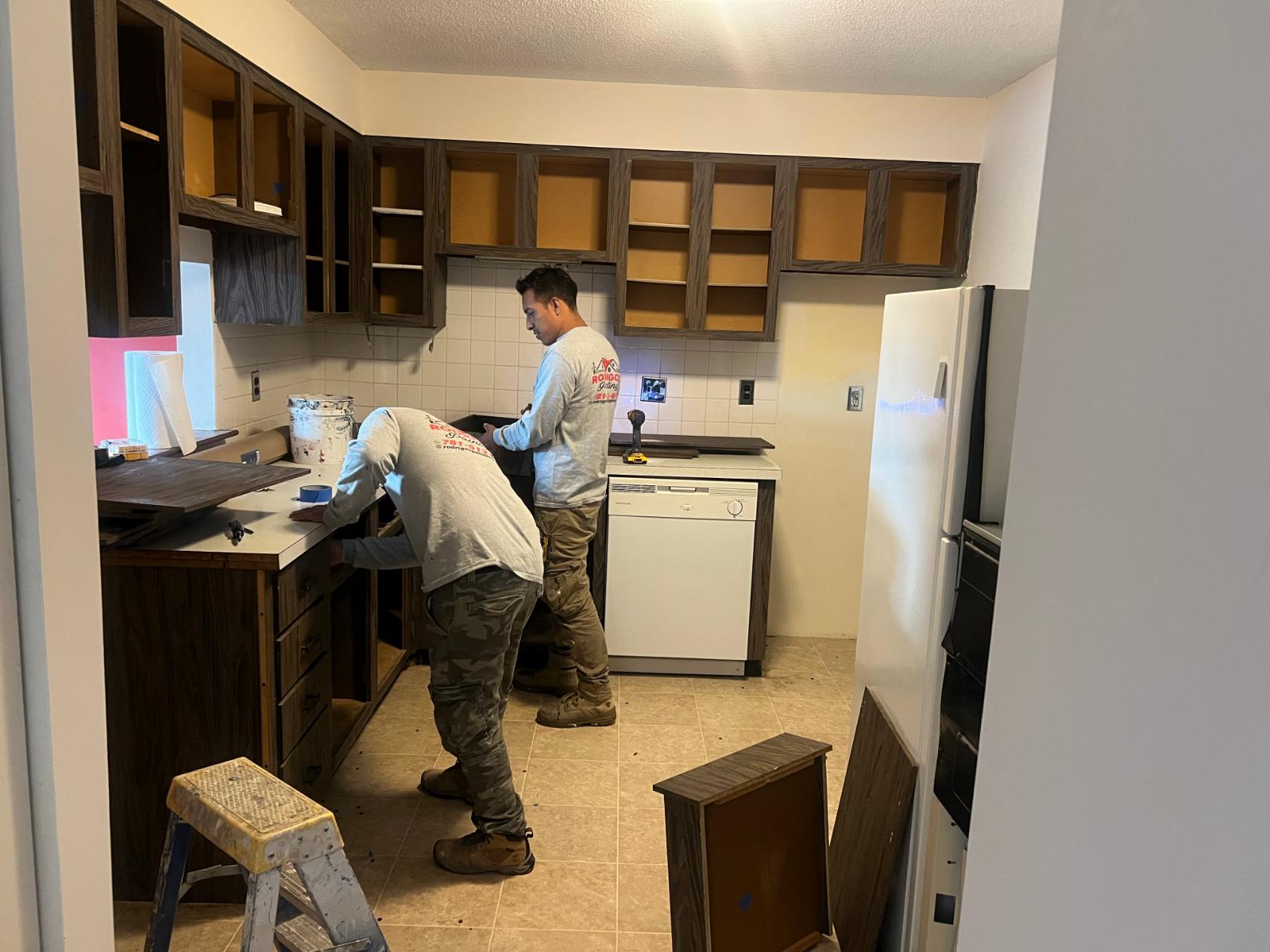
A successful kitchen cabinet painting project starts with proper surface preparation. Cleaning, sanding, repairing, and priming help create a smooth foundation for a durable and professional-looking finish.
Kitchen cabinets experience daily wear from cooking residue, grease, moisture, fingerprints, and frequent handling. These conditions can affect how well new paint adheres to cabinet surfaces. That is why knowing what to do before painting kitchen cabinets is essential for achieving a consistent result.
Before applying a new color, homeowners should focus on cleaning the cabinets, inspecting their condition, preparing the existing finish, and protecting the surrounding kitchen area. Each preparation step contributes to the quality of the final appearance.
Quick Answer: How Should You Prepare Kitchen Cabinets for Painting?
To prepare kitchen cabinets for painting, remove the hardware, clean away grease and dirt, inspect and repair damaged areas, sand or otherwise prepare the existing finish as required, protect nearby surfaces, and apply a compatible primer when needed. Always allow prepared surfaces to dry before painting.
The 4 Essential Kitchen Cabinet Preparation Steps
01 — Clean
Remove grease, cooking residue, fingerprints, and dirt before preparing the cabinet surface.
02 — Inspect
Check cabinet doors, drawer fronts, corners, and edges for damage or imperfections.
03 — Sand
Prepare the existing finish using the appropriate sanding or surface preparation method.
04 — Prime
Choose a compatible primer when the cabinet material and selected paint system require it.
How to Prepare Kitchen Cabinets Before Painting
1. Remove Cabinet Doors and Hardware
Removing cabinet doors, drawer fronts, handles, and knobs can make preparation and painting easier. Keep the hardware organized and label the cabinet doors so everything can be returned to its original location after the project.
This approach also helps painters reach edges, corners, and areas that may be difficult to access when cabinet doors remain attached.
2. Clean Grease and Cooking Residue
Kitchen cabinets frequently collect grease and residue, particularly around cooking areas and cabinet handles. These contaminants can interfere with paint adhesion if they remain on the surface.
Use an appropriate cabinet-safe cleaning product and follow its instructions. Remove cleaning residue when required and allow the surfaces to dry completely before moving to the next preparation stage.
3. Inspect and Repair Cabinet Surfaces
Examine cabinet doors, drawer fronts, edges, and frames for scratches, dents, cracks, loose components, or other imperfections. Addressing these problems before painting helps create a more uniform finish.
Any repair material should be suitable for the cabinet surface and the coating system being used.
4. Sand or Prepare the Existing Finish
The correct preparation method depends on the cabinet material and the condition of the existing coating. Sanding may help dull a glossy finish and improve the surface for the next coating. Some materials may require a different preparation method.
Remove sanding dust before applying primer or paint. Proper surface preparation helps reduce visible imperfections in the finished cabinets.
5. Protect the Kitchen Work Area
Protect countertops, floors, appliances, walls, and nearby fixtures before painting begins. Covering these areas helps prevent unwanted paint splashes and keeps the workspace organized.
6. Apply the Appropriate Primer
Primer selection depends on the cabinet material, existing finish, and type of paint being applied. A compatible primer can help improve adhesion and provide a more consistent foundation, especially when working with surfaces that are difficult to coat.
Why Professional Cabinet Preparation Matters
Kitchen cabinet painting involves more than changing the color. Cleaning, surface repairs, preparation, and product selection all affect the final result. Taking care of these details helps create a cleaner and more consistent finish.
Common Mistakes to Avoid Before Painting Kitchen Cabinets
- Painting over grease, dirt, or cooking residue.
- Ignoring scratches, dents, and damaged cabinet surfaces.
- Skipping necessary sanding or surface preparation.
- Using a primer that is not compatible with the cabinet material.
- Painting before cleaned surfaces are completely dry.
- Failing to protect countertops, floors, and appliances.
Frequently Asked Questions About Preparing Kitchen Cabinets for Painting
1. What should I do before painting kitchen cabinets?
Before painting kitchen cabinets, remove hardware, clean away grease and dirt, inspect for damage, prepare the existing finish, protect surrounding surfaces, and apply a compatible primer when needed. Allow surfaces to dry before painting.
2. Do kitchen cabinets need to be sanded before painting?
Sanding is often recommended to prepare an existing cabinet finish and improve paint adhesion. However, the correct approach depends on the cabinet material, existing coating, and paint manufacturer’s preparation instructions.
3. Should I remove cabinet doors before painting?
Removing cabinet doors and hardware can make it easier to prepare and paint edges, corners, and detailed areas. Labeling each door helps make reinstallation more organized.
4. How do I remove grease from kitchen cabinets before painting?
Use a suitable cleaning or degreasing product designed for the cabinet surface. Follow the manufacturer’s instructions, remove any required residue, and let the cabinets dry completely before painting.
5. Do kitchen cabinets need primer before painting?
Primer is not identical for every cabinet project. It is recommended when the cabinet material, existing finish, or selected paint system requires additional adhesion or coverage. Choose a primer that is compatible with the surface and finish.
6. Can laminate kitchen cabinets be painted?
Yes, laminate cabinets can be painted when the surface is in suitable condition and the correct preparation method and compatible bonding products are used. The surface should be evaluated before choosing a coating system.
Professional Kitchen Cabinet Painting Services
Proper preparation plays an important role in achieving an attractive kitchen cabinet finish. Whether cabinets need cleaning, sanding, minor repairs, or a new coating, selecting the right preparation process helps support a better result.
Rodrigo’s Painting provides kitchen cabinet painting services for homeowners looking to refresh their kitchen interiors. Explore our interior painting services or visit the Rodrigo’s Painting homepage to learn more about our residential painting solutions.
Final Takeaway
A professional-looking cabinet finish starts long before the first coat of paint. Thorough cleaning, proper surface preparation, necessary repairs, and compatible primer selection help create a better foundation for kitchen cabinet painting.