
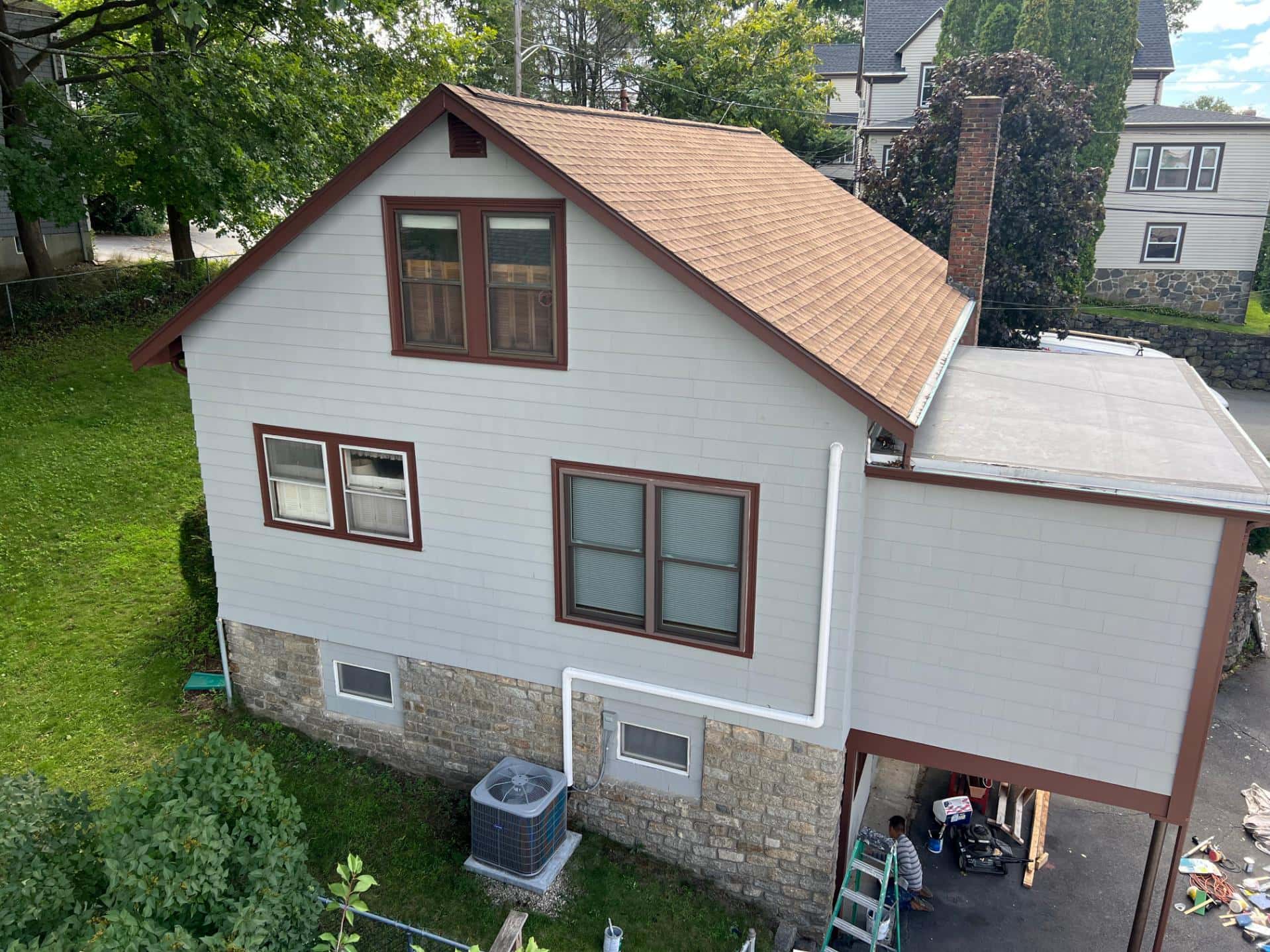
Choosing the right exterior color combination can make a major difference in a home’s curb appeal. The best exterior paint colors for white siding can create a clean, timeless appearance while allowing architectural details such as windows, trim, rooflines, and doors to stand out. This home demonstrates how white siding paired with brown trim can create a warm and traditional exterior that feels both polished and inviting.
Best Exterior Paint Colors for White Siding
White siding gives homeowners a versatile foundation because it works with many different accent colors. The right trim color can change the character of the entire exterior without requiring a major renovation.
Popular options include:
- Brown and warm wood-inspired tones
- Charcoal and dark gray
- Black
- Navy blue
- Deep green
- Warm beige
- Soft gray
The best choice depends on the home’s roof color, stone or brick foundation, landscaping, and architectural style. In the pictured property, brown trim coordinates naturally with the warm-toned roof and stone foundation.
Why Brown Trim Works With White Siding
Brown trim is an excellent option when homeowners want a softer alternative to black or charcoal. It provides enough contrast to define windows, roof edges, and other architectural features while maintaining a warm appearance.
The combination of white siding and brown trim is particularly effective on traditional and cottage-style homes. Brown can also complement natural materials such as stone, brick, wood, and earth-toned roofing.
On this home, the darker trim frames the windows and follows the roofline, creating visual definition across the exterior.
White Siding With Dark Trim for Curb Appeal
Dark trim is one of the easiest ways to add contrast to a light-colored home. While brown is shown in this project, homeowners can consider several other darker shades.
Black trim provides a bold, modern appearance. Charcoal offers a slightly softer alternative, while dark navy can add color without becoming overly bright.
For homeowners searching for exterior paint colors for white siding, the goal should be to create enough contrast to highlight architectural details without making the exterior feel visually busy.
A professional exterior painting service can help evaluate color samples against the existing roof, foundation, windows, and surrounding property.
How to Choose a Trim Color for White Siding
Before selecting a trim color, look at the permanent materials already present on the home. Roofing, masonry, stone foundations, windows, gutters, and doors should all be considered.
For example, warm brown trim can work particularly well when the property contains:
- Warm-colored roofing
- Natural stone
- Brick accents
- Wood elements
- Green landscaping
Cooler trim colors such as charcoal or navy may work better with gray roofing, blue-toned accents, or modern architectural designs.
It is also important to test paint samples before committing to a color. Exterior paint can appear lighter or darker depending on sunlight, shade, and the surrounding landscape.
Coordinating Exterior Siding, Trim, and Roof Colors
A successful exterior color scheme usually contains several colors that work together rather than competing for attention.
White siding can serve as the primary color. A darker shade can then be used for trim, while the roof and foundation provide additional supporting tones.
The home shown in this project demonstrates this approach effectively. The white siding keeps the exterior bright, brown trim adds contrast, and the warm roof and stone foundation reinforce the overall color palette.
This type of coordinated approach can be particularly valuable during a residential painting service, when several exterior surfaces are being refreshed at the same time.
Preparing Siding Before Exterior Painting
Color selection is important, but surface preparation also has a major effect on the finished appearance. Exterior siding should be evaluated before new paint is applied.
Depending on the condition of the property, preparation may involve cleaning the surface, removing loose or deteriorated paint, protecting windows and fixtures, and addressing areas that require repair.
Trim also requires careful preparation because imperfections are often more noticeable when a darker accent color is used.
Professional house painting services can provide the preparation and detailed application needed to create consistent coverage and clean transitions between siding and trim.
Creating a Timeless Exterior Color Combination
Trends can influence paint choices, but timeless combinations often provide the best long-term value. White siding with brown trim is an example of a classic palette that can complement both traditional architecture and established neighborhoods.
Homeowners who want more contrast can consider charcoal or black trim. Those looking for a cooler palette may prefer navy or deep gray. Green can provide an attractive connection between the home and surrounding landscaping.
Ultimately, the best exterior color combination should complement the property’s existing materials and reflect the homeowner’s preferred style.
FAQ
What are the best exterior paint colors for white siding?
Popular choices include brown, black, charcoal, navy, deep green, and warm beige. The best option depends on the home’s roof, foundation, windows, architectural style, and surrounding landscape.
Is brown trim a good color for white siding?
Yes. Brown trim creates attractive contrast against white siding while maintaining a warm, traditional appearance. It can also coordinate well with stone, brick, wood, and warm-colored roofing.
What trim color looks best with a white house?
There is no single best choice. Black and charcoal create stronger contrast, while brown and beige produce a softer, warmer appearance. Navy and dark green can add subtle color.
Should exterior trim match the roof?
Trim does not have to match the roof exactly, but coordinating the colors can create a more cohesive exterior. In this project, the brown trim works well with the warm roof color.
How can I choose the right exterior paint colors?
Consider your siding, roof, foundation, windows, doors, landscaping, and surrounding homes. Testing samples in both sunlight and shade can also help you determine how the colors will actually appear on the property.