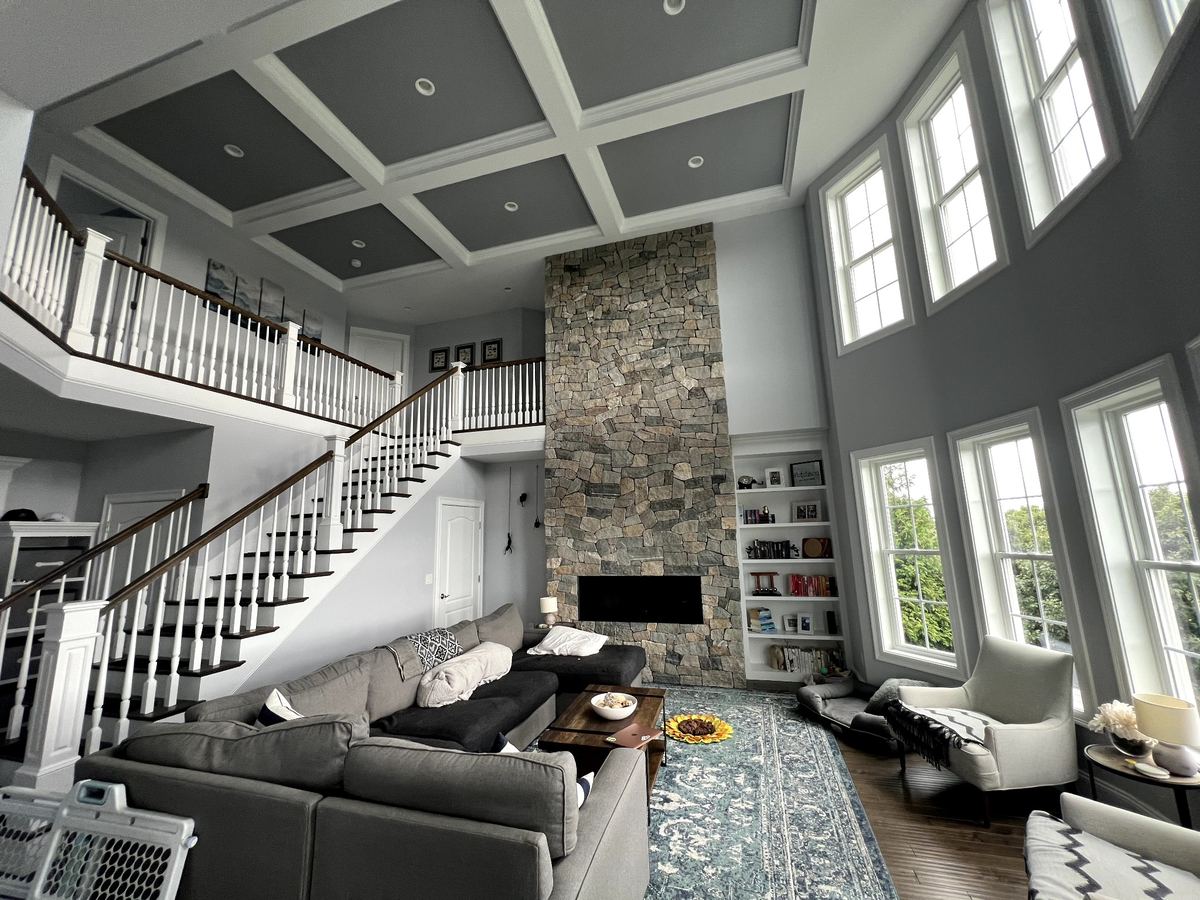
Stone fireplaces bring natural texture and variation into an interior room. Because stone can contain several shades at once, choosing wall color around it requires more attention than selecting paint for a blank wall. The goal is to support the fireplace without competing with its texture while keeping the room visually balanced.
Look at the Undertones in the Stone
Stone may include gray, tan, brown, cream, charcoal, or other subtle tones. Instead of matching one stone color exactly, look for an undertone that can connect the fireplace to the walls, flooring, furniture, and trim.
A wall color that clashes with the stone’s undertone can make the fireplace feel separate from the room. A coordinated color can create a more natural transition.
Consider Natural Light Before Choosing the Paint
Large windows and changing daylight can make paint colors appear different throughout the day. A color that looks soft in morning light may appear deeper later in the afternoon. Test samples in the actual room before committing to a full wall.
Rooms with limited daylight may benefit from colors that keep the space visually open, while brighter spaces can accommodate stronger contrast.
Balance the Fireplace With the Wall Color
A large stone fireplace already provides texture and visual weight. A quieter wall color can allow the stone to remain the focal feature. In other interiors, a stronger wall color can create a dramatic contrast, especially when the surrounding trim is light.
Think about the entire room rather than choosing a color from the fireplace alone. Furniture, flooring, window treatments, and ceiling color all influence how the finished wall will look.
Coordinate White Trim With Stone and Wall Paint
White trim can create a clean frame around a textured fireplace, but the exact shade of white matters. A very cool white can look different beside warm-toned stone than a softer white or warmer neutral. Comparing samples next to the actual trim and fireplace is more reliable than choosing from a small color card alone.
For connected rooms or open layouts, open floor plan paint palette planning can help keep colors consistent from one area to another.
Use Contrast Without Overwhelming the Room
Contrast can be created through wall color, trim, furniture, or the fireplace itself. A room does not need multiple strong colors to feel designed. Often, one dominant surface feature paired with coordinated supporting colors creates a more organized result.
When the stone has many natural variations, a simpler wall color can reduce visual clutter and help the fireplace’s texture remain clear.
Prepare the Walls Before Applying a New Color
Even the right paint color can look disappointing when the wall is poorly prepared. Dust, surface damage, uneven repairs, or old loose coatings can affect coverage and appearance. Proper preparation supports a smoother and more consistent finish.
Rodrigo’s Painting can provide interior painting services for rooms where color selection, preparation, and finish application need to work together.
Make the New Color Work With the Rest of the Home
A room with a stone fireplace often connects to hallways, dining areas, kitchens, or other living spaces. Before finalizing a color, consider how it transitions into nearby rooms. A balanced home palette can use related undertones rather than repeating the exact same color everywhere.
For homeowners planning a broader painting project, Rodrigo’s Painting can help organize the project around the home’s existing architectural features and finishes.
Frequently Asked Questions About Interior Paint Colors for Rooms With Stone Fireplaces
What paint colors look good with a stone fireplace?
Neutral colors are often versatile, but the best choice depends on the stone’s undertones, lighting, trim, flooring, and furnishings. Sampling colors in the actual room helps narrow the options.
Should the wall color match the stone fireplace?
The wall does not need to match the stone exactly. Coordinating with one or more of the fireplace’s undertones can create a more connected appearance.
How many paint colors should I use around a stone fireplace?
There is no fixed number, but a limited palette can help the room feel organized. One main wall color with coordinated trim and accents is often enough to create contrast.
Why does paint look different next to a fireplace?
The color and texture of natural stone can influence how nearby paint is perceived. Lighting and surrounding finishes also change the apparent warmth or coolness of a wall color.