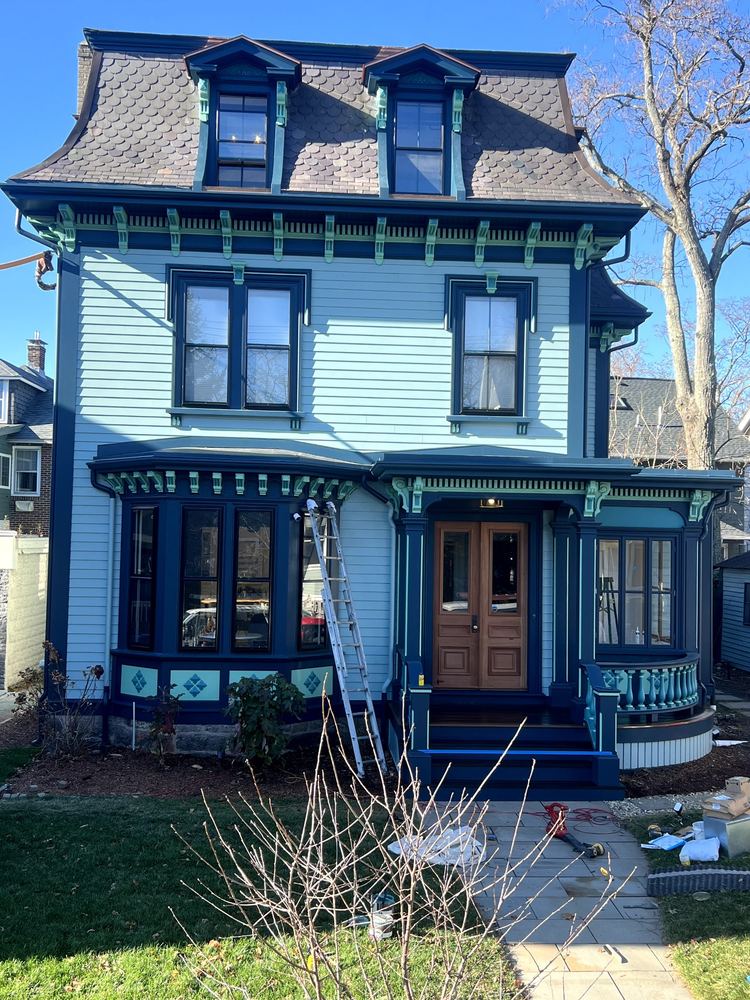
Older homes often have architectural trim that gives the exterior its character. Brackets, window surrounds, cornices, porch elements, decorative rails, and other details can make an exterior painting project more complex than repainting a simple modern facade. Painting decorative trim on older homes in Massachusetts requires careful preparation so the finished colors look clean while the architectural features remain clearly defined.
Inspect Decorative Trim Before Painting
Begin by checking the condition of the trim, siding, window areas, and other exterior surfaces. Look for peeling coatings, damaged wood, cracks, soft areas, or previous repairs. Problems should be identified before the finish color is applied because paint alone will not correct an underlying surface issue.
Older properties can also contain many separate trim sections. Listing the components before work begins can help create a consistent painting sequence.
Clean the Exterior Before Surface Preparation
Dirt, dust, pollen, and loose material can interfere with adhesion. Cleaning should remove surface contamination without unnecessarily damaging the existing material. Areas that remain loose or unstable should be addressed before primer or finish coats are applied.
For projects that include siding or masonry, the preparation method should be appropriate for the actual surface.
Repair Damaged Trim Before Applying Paint
Decorative trim is easiest to finish when its surface is stable and properly repaired. Replace or repair damaged sections as needed, address cracks and gaps, and allow repair materials to cure according to their requirements before painting.
Where carpentry work is necessary, Rodrigo’s Painting carpentry services can be part of the preparation plan before the exterior finish is applied.
Choose Exterior Colors for Architectural Detail
Older homes can support multiple coordinated colors without appearing visually crowded. A practical approach is to establish a main body color, a trim color, and optional accent colors for selected architectural features. The final combination should reflect the home’s design and the surrounding property.
Using too many unrelated colors can make detailed architecture look fragmented. A controlled palette can make brackets, window trim, porch features, and other elements easier to read from the street.
Protect Windows, Masonry, and Nearby Surfaces
Decorative trim often sits close to glass, brick, stone, gutters, and other finished surfaces. These areas should be protected during preparation and painting. Masking, drop protection, and controlled application help prevent accidental splatter and unwanted paint buildup.
When the entire exterior needs a coordinated finish, exterior painting services can address the larger surface areas while maintaining attention to architectural trim.
Work in a Consistent Painting Sequence
Complex exteriors benefit from a planned sequence. Complete preparation first, then proceed through the priming and finish stages in a controlled order. This helps reduce accidental damage to freshly painted sections and keeps color transitions consistent.
Weather also affects exterior painting schedules. Surface temperature, moisture, and changing conditions should be considered when deciding when to apply coatings.
Maintain the Character of an Older Home
The purpose of painting an older home is not only to add fresh color. A thoughtful project should help preserve the visual relationship between the home’s siding, trim, windows, porch elements, and other architectural features.
For a broader painting project, Rodrigo’s Painting can coordinate exterior preparation, repairs, and finish application around the home’s existing architecture.
Frequently Asked Questions About Painting Decorative Trim on Older Homes
Why does decorative trim require extra preparation?
Decorative trim has more edges, joints, surfaces, and transitions than a flat wall. These areas can make imperfections and uneven paint application more noticeable.
Should damaged exterior wood trim be repaired before painting?
Yes. Damaged or unstable material should generally be repaired or replaced before finish coats are applied so the new paint has a sound surface to adhere to.
How many exterior colors work well on an older home?
There is no universal number. A main body color, coordinated trim color, and selective accent color can provide definition without making the exterior feel overly busy.
Can exterior trim be painted a darker color than the siding?
Yes. Darker or contrasting trim can emphasize architectural lines, but the final combination should be evaluated with the home’s existing materials, roof, windows, and surrounding colors.
What should be protected before exterior trim painting?
Windows, masonry, gutters, landscaping, walkways, and other finished surfaces near the painting area should be protected as appropriate to the project.